August 10, 2026 | By Admin
Vedic Astrology vs Western Astrology: Key Differences
The same birth date can sometimes lead to two different zodiac signs. This often leaves people wondering which one they should follow. The answer lies in the way different astrological systems calculate the zodiac and interpret a birth chart. Vedic Astrology and Western Astrology share some basic concepts, but their methods, reference points, and areas of focus can differ significantly.
Hence, understanding these differences can help readers make sense of the two systems without confusion. In this blog, we will highlight the key differences between Vedic Astrology vs Western Astrology and explain how each approaches a birth chart. If you want to consult a reputable astrologer in Kolkata, Sree Sibnath is always a trusted choice.
Vedic Astrology vs Western Astrology: Understanding the Difference
Here’s the list of prominent differences between Vedic Astrology and Western Astrology.
Different Zodiac Systems
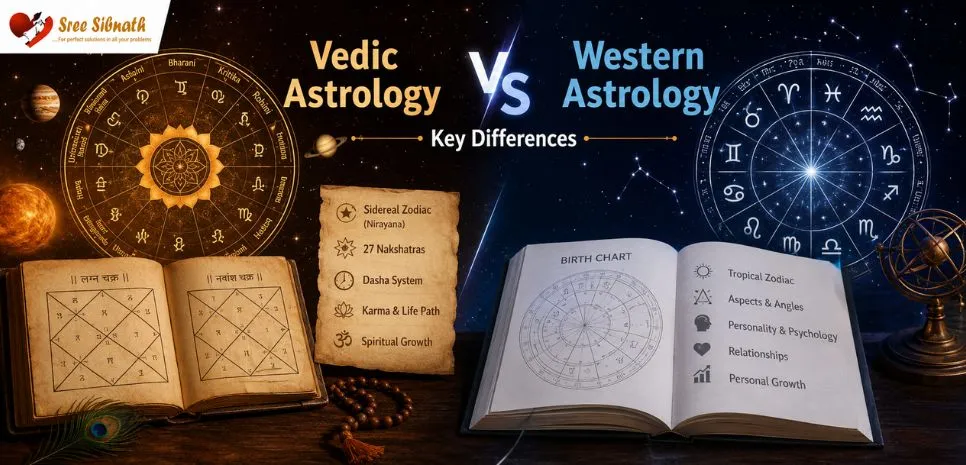
The biggest difference between Vedic and Western Astrology is the zodiac system they use. Vedic Astrology mainly uses the sidereal zodiac, which relates planetary positions to the stars. Western Astrology, on the other hand, utilizes the tropical zodiac, which connects the zodiac to the seasons and equinoxes.
Due to the gradual precession of Earth’s axis, the two systems are now roughly 23-24 degrees apart. This can make a person’s zodiac sign different in a Vedic and Western chart.
Different Approach to Birth Charts
Another major difference between Vedic Astrology and Western Astrology is the different approach to birth charts. Both systems create birth charts from information such as the date, time, and place of birth. However, they interpret the chart differently.
Vedic Astrology places strong importance on the Ascendant, Moon sign, houses, planetary positions, and Nakshatras. It divides the zodiac into 27 Nakshatras, or lunar mansions, to add greater detail to chart interpretation. Western Astrology often gives greater attention to the Sun sign, Moon sign, planets, houses, and the relationships between planets known as aspects.
Nakshatras are Important in Vedic Astrology
Do you know that Vedic Astrology looks beyond the familiar 12 zodiac signs? It uses 27 Nakshatras, each covering a specific section of the zodiac. The Moon’s position at birth determines a person’s Nakshatra. Astrologers use this system to add another layer of interpretation to a birth chart. Western Astrology does not use the Nakshatra system in the same traditional way.
Vedic Astrology Uses Dasha Systems
One notable feature of Vedic Astrology is its use of Dasha systems. Dashas divide life into planetary periods and help to study the timing of different phases or developments. The Vimshottari Dasha, for example, is a widely used 120-year planetary-period system in Jyotish. Western Astrology has its own timing techniques. However, it does not traditionally use the same Nakshatra-based Dasha framework.
Different Areas of Focus
Many people associate Western Astrology with personality and psychological themes. It often explores questions about character, emotions, relationships, motivations, and personal growth.
Vedic Astrology traditionally places greater emphasis on life patterns, planetary periods, karma, and timing. You can consult Vedic Astrology for areas such as marriage, career, finance, and major life decisions. However, these are broad tendencies instead of strict rules. Individual astrologers may use different methods within each tradition.
Which Astrology is Better?
There is no simple answer to whether Vedic Astrology or Western Astrology is “better.” They use different frameworks to offer different ways of interpreting a birth chart or effective love problem solution in Kolkata.
If you want to explore traditional Jyotish, Nakshatras, planetary periods, and a sidereal chart, Vedic Astrology may interest you. If you prefer a tropical chart with greater emphasis on personality and psychological interpretation, Western Astrology may appeal to you. We all know that astrology is a vast subject. Instead of judging a system only by your Sun sign, it is useful to understand the complete method behind it.
FAQs
Is Vedic Astrology more accurate than Western Astrology?
Accuracy claims depend on the tradition and astrologer. Vedic and Western Astrology use different calculation and interpretation methods, so their readings can differ.
Why is my Vedic zodiac sign different?
Vedic Astrology generally uses the sidereal zodiac, while Western Astrology generally uses the tropical zodiac. This difference in reference points can shift planetary signs.
Which astrology is better for marriage?
Vedic Astrology has traditional methods for examining marriage, compatibility, planetary periods, and related chart factors. However, the approach can vary among astrologers.
Can I follow both Vedic and Western Astrology?
Yes. Many people explore both systems to understand their different approaches to personality, planetary positions, and life themes.
The Closing Thoughts
Vedic Astrology and Western Astrology may look similar at first. However, their calculation methods and interpretive traditions can create important differences. Do you want personalized astrological guidance based on traditional Vedic Astrology? Then, connect with Sree Sibnath, the best Tantrik in Kolkata today, and take a thoughtful step towards understanding your life’s important questions.


 Online chat