October 20, 2026 | By Admin
Shabar Mantra vs Vedic Mantra: A Guide to Their Differences
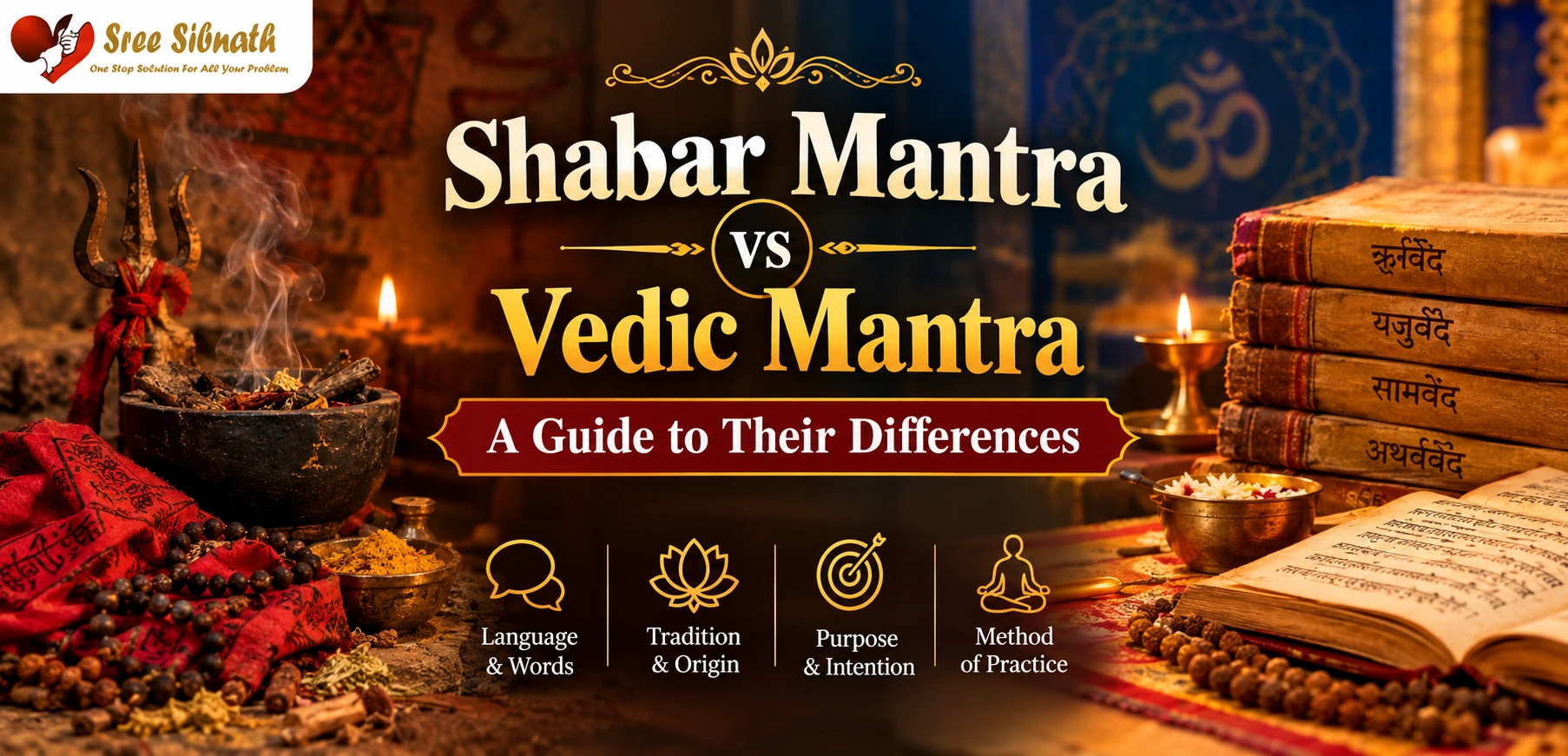
A few sacred words can carry centuries of faith, tradition and spiritual meaning. In Indian spiritual practices, mantras hold a special place. However, not every mantra follows the same tradition or method of chanting. Shabar Mantras and Vedic Mantras are two distinct forms that attract interest among spiritual seekers. Both have deep roots in Indian religious traditions, but they differ in language, origins and methods of practice. Hence, understanding these differences can help people explore mantra traditions with greater care and respect.
In this blog, we will discuss the key differences between Shabar Mantra and Vedic Mantra and explain their traditional significance.
What is a Shabar Mantra?
Shabar Mantras belong to folk and Tantric spiritual traditions. Many versions use simple regional languages or a mix of local words and Sanskrit. Their wording often reflects the language and culture of the communities that passed them down through generations.
Famous Vashikaran specialist in India associate Shabar Mantras with specific spiritual intentions. These may include protection, devotion and seeking guidance during difficult times. However, their wording and practices can vary across traditions.
The key features of Shabar Mantras include:
- Language: Many use regional languages or a mix of languages.
- Tradition: They often belong to folk and Tantric practices.
- Purpose: Practitioners use them for different spiritual intentions.
- Transmission: Many traditions pass them down orally from teacher to student.
What is a Vedic Mantra?
Vedic Mantras come from the ancient Vedas, which form an important part of Hindu religious tradition. These sacred texts contain hymns, prayers and ritual formulas in Vedic Sanskrit. Practitioners have preserved them through oral recitation for thousands of years.
Vedic chanting places strong emphasis on correct pronunciation, sound and pitch. The Gayatri Mantra is a well-known example of a Vedic mantra. It comes from the Rigveda and holds an important place in Hindu prayer and spiritual practice.
The key features of Vedic Mantras include:
- Language: They use Vedic Sanskrit.
- Origin: They come from the Vedic textual tradition.
- Chanting: Traditional recitation follows specific sounds and tones.
- Purpose: They feature in prayers, rituals and spiritual reflection
Shabar Mantra vs Vedic Mantra: Key Differences
Although both traditions use sacred sounds and words, they differ in several important ways. Below are some common differences between the Shabar Mantra and Vedic Mantras.
Vedic Mantras come from the Vedas and their related ritual traditions. Shabar Mantras belong to vernacular spiritual traditions and appear in some folk and Tantric practices.
-
Language and Pronunciation
Shabar Mantras often use regional languages and familiar expressions. Vedic Mantras follow the language and structure of the Vedic texts.
Vedic chanting often follows established rules for sound, rhythm and ritual use. Shabar Mantra practices vary by lineage and may involve particular instructions from a teacher. Hence, consult the best astrologer in Kolkata, who understand the relevant tradition before beginning a formal practice.
Vedic Mantras serve purposes such as worship, ritual offerings, prayer and spiritual reflection. Shabar Mantras may appear in folk traditions associated with protection, removing obstacles and other personal concerns.
Which Mantra Should You Choose?
The right choice should depend on your spiritual interests and the tradition you wish to follow. If you want to explore Vedic chanting, learn about its history, pronunciation and ritual context. If Shabar Mantra traditions interest you, try to seek guidance from a knowledgeable practitioner. Avoid anyone who guarantees supernatural results or uses fear to pressure you into costly rituals. Remember, spiritual practices should encourage informed and thoughtful choices.
FAQs
- Are Shabar Mantras and Vedic Mantras the same?
No. They come from different traditions and may differ in language, structure and method of practice.
- Do Shabar Mantras require Sanskrit knowledge?
Not always. Many Shabar Mantras use regional languages, although some may include Sanskrit words.
- Can beginners chant Vedic Mantras?
Beginners can learn many forms of Vedic chanting. A qualified teacher can help them understand pronunciation and traditional guidelines.
The Conclusion
Shabar Mantras and Vedic Mantras reflect different aspects of India’s rich spiritual heritage. Vedic Mantras follow traditions rooted in the Vedas, while Shabar Mantras draw from vernacular and folk spiritual practices. Hence, learning about their origins, language and methods can help you understand their distinct roles.
If you want to explore Shabar Mantras, Vedic traditions and Tantric practices, Sree Sibnath offers astrology and traditional spiritual guidance. Search for the term ‘tantrik near me’ and contact Sree Sibnath to learn more about the available services and arrange a consultation.


 Online chat